


Ebook Free Philosophy: A Very Short Introduction, by Edward Craig
Sometimes, being in this site as the member will be so enjoyable. Yeah, taking a look at guide collections everyday will certainly make you feel wow. Where else you will see those several book collections, in the collection? What type of collection? In collection, often, there are lots of sources, however numerous old books have been displayed.
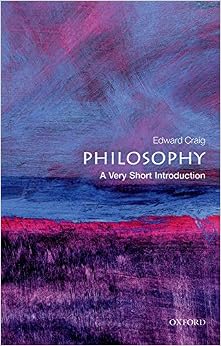
Philosophy: A Very Short Introduction, by Edward Craig

Ebook Free Philosophy: A Very Short Introduction, by Edward Craig
That's it, a publication to wait on in this month. Even you have actually desired for long period of time for releasing this book entitled Philosophy: A Very Short Introduction, By Edward Craig; you might not be able to get in some stress and anxiety. Should you go around and also look for fro guide until you really get it? Are you certain? Are you that totally free? This problem will compel you to constantly wind up to get a publication. Today, we are coming to provide you excellent remedy.
To satisfy individuals need regarding obtaining guide, we offer this internet site to go to. Not only to see, can you likewise be the member of this website to get the brand-new updated book every day. As right here, we will provide to you as the very best Philosophy: A Very Short Introduction, By Edward Craig today. It is really fascinating to expose that many individuals love analysis. It implies that the demands of the books will certainly boost. But, just how is about you? Are you still spirit to complete your analysis?
Now, you may know well that this book is primarily recommended not only for the viewers that enjoy this topic. This is likewise promoted for all people and public form culture. It will not limit you to check out or not guide. Yet, when you have actually started or started to review DDD, you will recognize why precisely the book will certainly offer you al positive things.
However, also this publication is produced based on the truth, one that is extremely intriguing is that the writer is really clever making this publication easy to read as well as comprehend. Appreciating the wonderful visitors to constantly have reading behavior, every writer offers their finest in offering their thoughts and also jobs. That you are and also what you are doesn't end up being any type of big problem to get this book. After seeing this website, you can inspect even more about this book and afterwards find it to understand reading.
Amazon.com Review
Philosophy: Questions for Consideration and Discussion If you wanted to avoid philosophy completely, what would you have to do? Do you really have a right to your own opinion? Always, or only sometimes? Are there limits to what the State can properly demand of its citizens? Some people believe in miracles. Why? What would happen if you decided not to believe anything without having a good reason for it?
Read more
Review
`[The Very Short Introduction to Philosophy] shows that philosophy really can be fascinating, broad-minded and full of surprise. As a means of stimulating interest in the subject it has few rivals.'Julian Baggini, The Philosopher's Magazine
Read more
See all Editorial Reviews
Product details
Paperback: 144 pages
Publisher: Oxford University Press; 1st edition (May 16, 2002)
Language: English
ISBN-10: 0192854216
ISBN-13: 978-0192854216
Product Dimensions:
6.8 x 0.3 x 4.3 inches
Shipping Weight: 4.2 ounces (View shipping rates and policies)
Average Customer Review:
4.2 out of 5 stars
32 customer reviews
Amazon Best Sellers Rank:
#207,596 in Books (See Top 100 in Books)
As a philosopher who is often asked about what philosophy is, what its practical uses are, where should a person start if they want to study philosophy carefully, etc, I was genuinely excited to pick up Philosophy: A Very Short Introduction. I had figured that I would read and then recommend it as the best starting point for the philosophy novice. I was not totally wrong, but neither was I totally right.The books merits are that it introduces the general reader to some of the big branches of philosophy (epistemology, metaphysics, ethics, etc), some of the big names in philosophy (Socrates, David Hume, Epicurus, John Stuart Mill), and some of the various schools of philosophy (idealism, empiricism, rationalism, etc). However, it does so in a very scattered manner and the terms are not as clearly defined as one would like, especially since the book is marketed toward those who are beginners in philosophy. The author on one page is talking about ethics, then miracles, then idealism... but it is scattered rather than connected. It helps, however, that the author is good with words, because while it is scattered it is not boring.I would recommend this book to beginners, but books like Bertrand Russell's The Problems of Philosophy are better introductions to the field.
This is a nice introduction to Philosophy but it is not a conventional one. It is not a history, for example, though it has historical elements; and it is not a delineation of philosophy's specific fields (e.g. ethics, metaphysics, epistemology, and so on), though it talks about some of those fields. Nor does it attempt to provide a systematic list of philosophy's principal themes.It refers to some classic texts in philosophy (Plato's Crito; Hume's Essay on Miracles, et al.) but it does not, of course, reprint them within this small space. At some points it creates a one-sided dialogue with the reader, in which the reader is encouraged to examine certain passages in the classic texts.At other points there are discussions of isms and current themes, e.g., the rights of animals. There is a very useful, but brief bibliography at the end of the book that suggests opportunities for further readings.The bottom line is that the book jumps from place to place, idea to idea, philosopher to philosopher, and is a bit of a jumble. At the same time there is a sense of unity in the text that arises from the genial demeanor of the author and his reassurances offered to the reader that the doing of philosophy is not an impossible task and that the reader is probably up to the job.The result is more of a 'good read' than a coherent introduction to the subject of philosophy. The writing is pleasant and lucid and many important subjects are addressed. The book is relatively unique in its inclusion of elements of eastern philosophy and the manner in which eastern philosophic themes can be woven together with western ones. There are a set of nice illustrations. All in all this is a pleasant book on the general subject of philosophy. While not a systematic introduction to the subject it is a leisurely and attractive 'discussion of' philosophy.
There are many things I am not good at. I’ve gone to a few activities at Painting with a Twist but my portraits are, well, pretty terrible. I can grill a steak but beware if you eat anything I’ve cooked more complicated than a slab of beef. I love baseball and I used to be pretty decent at it but at no point in time have I been a very strong batter.Now that I’ve tooted by own humble-horn let me add to the above list the broad topic of philosophy. I love epistemology and logic but I don’t much care for metaphysics and ethics. It’s probably because I’m not very good at working through all the philosophical positions that surround metaphysics and ethics. But Edward Craig won’t let me off the hook on any aspect of philosophy. If I or anyone else were to claim that philosophy is useless then I or “they will be talking about the ineffectuality of certain types of thought, or of human beings’ incapacity to deal with certain types of question. And then instead of rejecting philosophy [I or] they will have become another voice within it†(2). We are all philosophers of one sort or another.For people like me who have only read a handful of philosophical works, Craig’s contribution to the VERY SHORT INTRODUCTION series is helpful in most regards. Before I get to those helpful items, let me just mention one problem I had with the volume.Craig is a Brit and he writes like one. I’m an American and though I’ve read plenty of Shakespeare, grew up reading the King James Bible, and love British television shows like “Good Neighbors,†“The Vicar of Dibley,†and “Keeping Up Appearances,†I found the prose of PHILOSOPHY: A VERY SHORT INTRODUCTION a bit wonky at times. When you read it, be prepared to re-read some sentences so you are clear on what he is discussing. Admittedly, the issue is more likely my own than Craig’s. It isn’t his fault I’m a simple minded American. But it would have been nice if the prose had been easier to read.Let’s move on. What makes this volume a worthy contribution to human knowledge and understanding?First, the book’s format is based upon specific philosophers and their positions on different aspects of philosophy. Chapter two covers ethics and Craig discusses Plato’s work CRITO in which he details a conversation between the soon-to-be executed Socrates and his friend Crito. Chapter three covers epistemology and there we encounter David Hume and his analysis of miracles. Chapter four is all about metaphysics and we meet a Buddhist named Nagasena and a king named Milinda.Other chapters deal with specific themes like consequentialism, contract theory, and integrity (chapter 5) or Idealism, dualism, and skepticism (chapter 6).Chapter 7 is perhaps the best chapter of them all. Craig deals with Descartes, Hegel, Darwin, and Nietzsche. And in so doing he gives us some interesting problems to think about. When discussing the implications of Darwin’s theory of evolution by natural selection, Craig wonders what would happen if Descartes had lived after Darwin. What would Descartes do with the implication that the mind is the product of natural processes and not the gift from God that he had supposed? How radical would it change his entire philosophy?Chapter 8 of this very short introduction to philosophy draws out the implications of philosophical thought on different groups like the individual, the State, women, and philosophers. Philosophy has direct bearing on just about everything and this book has certainly opened up my eyes to the truth of that. But this book is only a very short introduction and the bibliography serves us a springboard to other works including those by Bertrand Russell, David Hume, and so many more.If you are interested in philosophy and don’t know a lot about the topic, this is the book for you. If it does its job, it will spur you onto reading more books on philosophy covering the topics of logic, metaphysics, ethics, and epistemology. The VERY SHORT INTRODUCTION series has them all and I plan on reading each of them to try and get a grip on the philosophical world.If you think you will never use philosophy then, well, you really need to read this book. Philosophy isn’t dead. It isn’t useless. It is part of everything.
Philosophy: A Very Short Introduction, by Edward Craig PDF
Philosophy: A Very Short Introduction, by Edward Craig EPub
Philosophy: A Very Short Introduction, by Edward Craig Doc
Philosophy: A Very Short Introduction, by Edward Craig iBooks
Philosophy: A Very Short Introduction, by Edward Craig rtf
Philosophy: A Very Short Introduction, by Edward Craig Mobipocket
Philosophy: A Very Short Introduction, by Edward Craig Kindle
0 comments:
Post a Comment